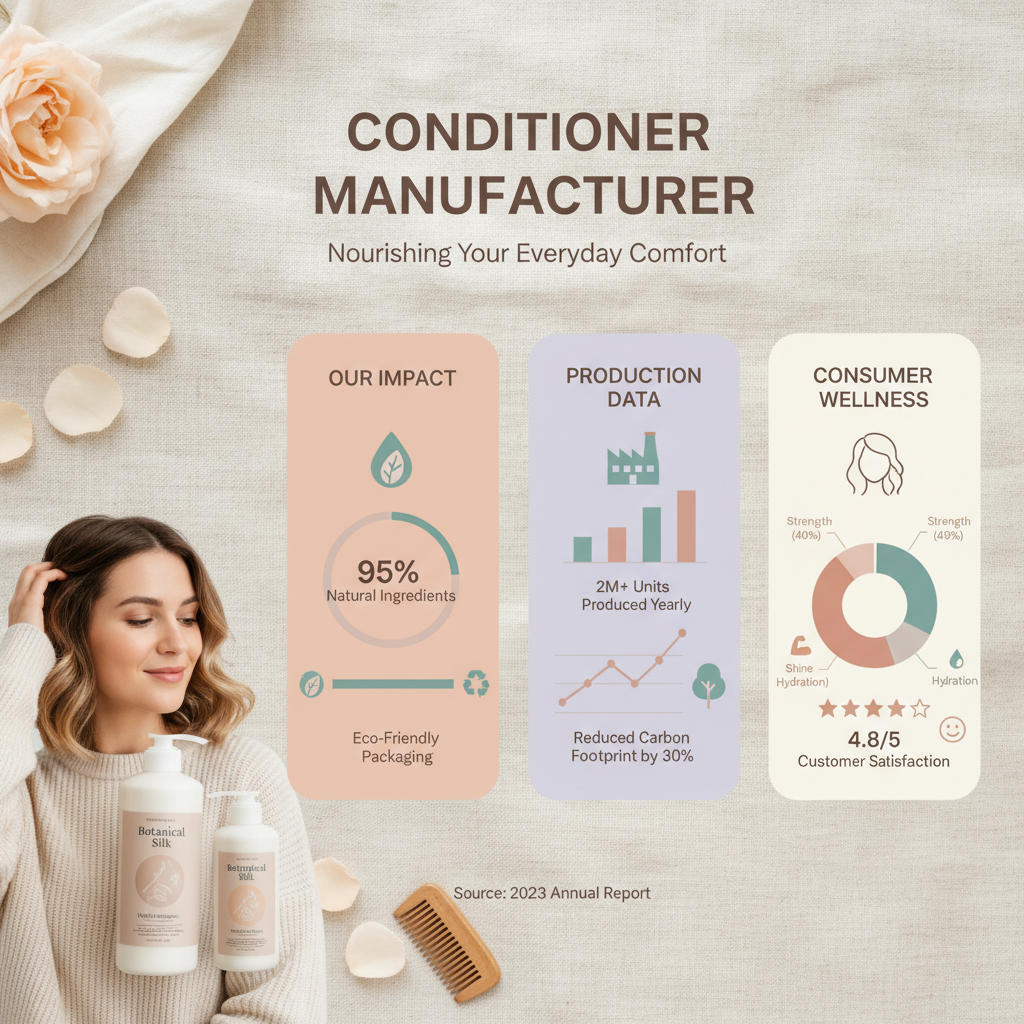
Finding a reliable Conditioner Manufacturer is a pivotal decision for any beauty brand aiming to bridge the gap between raw chemical potential and a luxurious consumer experience. In the competitive landscape of personal care, the quality of a conditioner—its viscosity, scent retention, and detangling efficacy—determines whether a customer becomes a lifelong loyalist or a one-time buyer.
The global demand for specialized hair care has surged, driven by a deeper understanding of scalp health and hair porosity. Modern consumers no longer seek a generic product; they demand formulations tailored to specific needs, such as sulfate-free options, deep repairing masks, and organic nourishing oils. This shift has placed immense pressure on the Conditioner Manufacturer to innovate beyond basic emulsions.
By leveraging advanced chemical engineering and sustainable sourcing, a professional manufacturer transforms basic ingredients into high-performance assets. Understanding the nuances of surfactant chemistry and the integration of bioactive botanical extracts allows brands to launch products that not only look appealing on a shelf but deliver measurable results in hair texture and strength.
The Role of a Professional Conditioner Manufacturer in Modern Beauty
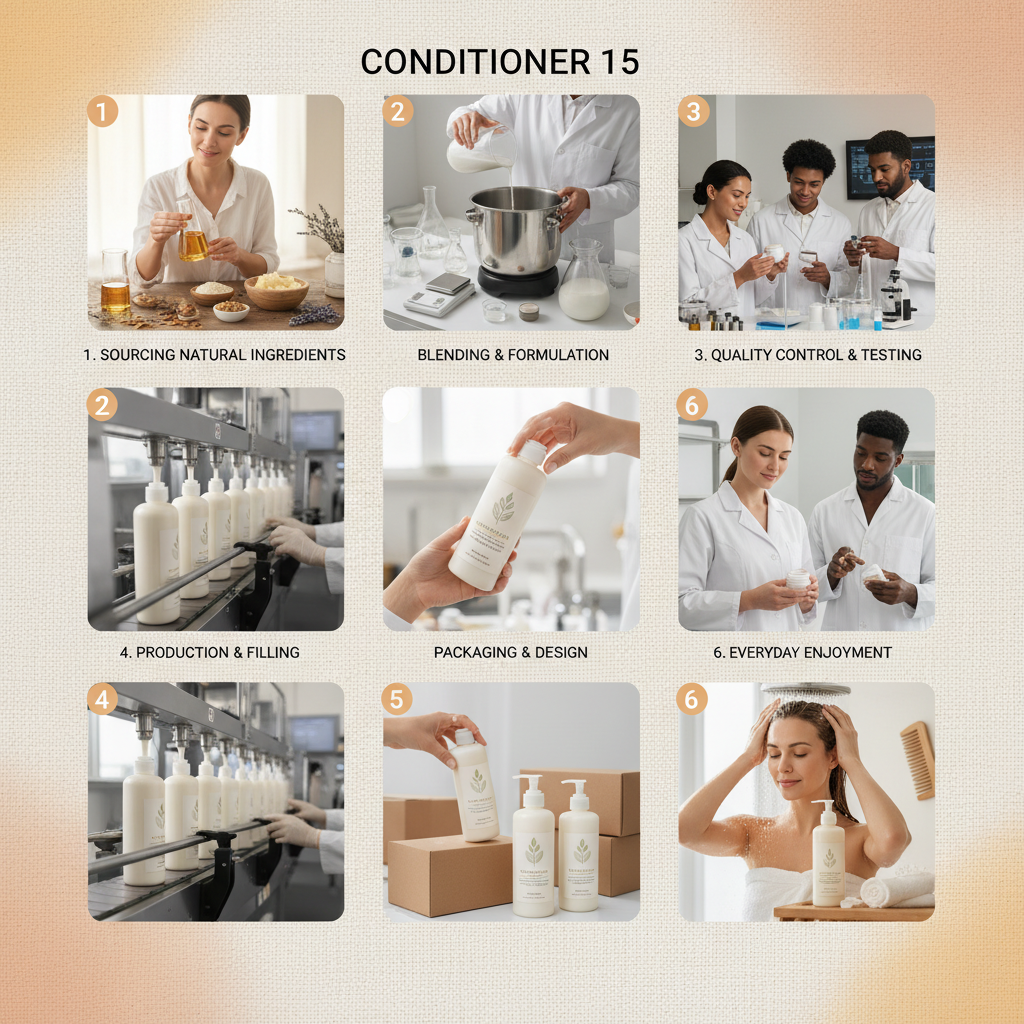
A specialized Conditioner Manufacturer acts as the technical engine behind a brand's success. Beyond simple mixing, these entities employ chemists who understand the complex interaction between cationic surfactants and the negatively charged keratin protein of the hair shaft. This expertise ensures that the final product provides an immediate smoothing effect while maintaining long-term hair health.
Furthermore, the manufacturer manages the critical transition from a laboratory sample to mass production. Scaling a formula without losing the delicate balance of fragrance and stability requires precision equipment and rigorous SOPs. By partnering with an expert manufacturer, brands can ensure that every bottle delivered to the customer meets the exact specifications of the original prototype.
Core Components of High-Performance Hair Conditioning
The efficacy of any product developed by a Conditioner Manufacturer relies on the synergy of four main components: emollients, emulsifiers, humectants, and active conditioning agents. Emollients, such as natural oils and silicones, create a protective seal over the cuticle, reducing friction and preventing breakage during combing.
Emulsifiers are the unsung heroes that keep oil and water blended in a stable, creamy texture, preventing the product from separating on the shelf. Meanwhile, humectants like glycerin or hyaluronic acid draw moisture from the air into the hair shaft, which is essential for treating dry or chemically processed hair.
Finally, the active conditioning agents—often quaternary ammonium compounds—neutralize the negative charge of damaged hair. This electrostatic balance is what provides the "slip" and detangling properties that consumers associate with professional-grade salon products.
Technical Standards for Quality Assurance
Consistency is the hallmark of a top-tier Conditioner Manufacturer. Every batch must undergo rigorous viscosity testing to ensure that the product pours and spreads exactly as intended, regardless of the production volume.
Microbiological stability is non-negotiable. A professional Conditioner Manufacturer employs preservative systems that are not only effective against bacteria and mold but are also compliant with global safety regulations such as the EU Cosmetics Regulation and the FDA.
Stability testing involves exposing the product to extreme temperatures and light conditions (accelerated aging) to guarantee that the color, scent, and chemical integrity remain intact throughout the product's intended shelf life.
Global Market Applications and Use Cases
The versatility of a Conditioner Manufacturer allows them to serve diverse market segments. For instance, in the high-end salon market, the focus is on "deep conditioning hair masks" and "hair repairing conditioners" that utilize hydrolyzed proteins and ceramides for intensive structural repair.
Conversely, in the men's grooming sector, the demand has shifted toward "beard oils" and "men's moisturizers" that provide conditioning without the greasy residue typical of traditional hair products. This requires a different approach to lipid selection and fragrance profiling.
Manufacturing Efficiency by Product Category
Long-Term Value of Strategic Manufacturing Partnerships
Partnering with an experienced Conditioner Manufacturer provides brands with a significant competitive edge in R&D. Instead of spending years on trial and error, brands can leverage the manufacturer's existing "base formulas," which are already tested for stability and performance, drastically reducing time-to-market.
Moreover, the long-term value lies in the supply chain resilience. A manufacturer with strong relationships with raw material suppliers can protect a brand from the volatility of ingredient prices and shortages, ensuring that production schedules remain consistent and customer demand is always met.
Future Trends in Sustainable Hair Care Innovation
The future of the Conditioner Manufacturer is inextricably linked to "Green Chemistry." There is a massive shift toward biodegradable surfactants and the elimination of microplastics and non-recyclable silicones. Manufacturers are now innovating with plant-based alternatives that offer the same slip and shine as traditional chemicals but with a fraction of the environmental impact.
Digital transformation is also playing a role, with AI-driven formulation software allowing manufacturers to predict how different ingredients will interact before a single drop is mixed in the lab. This reduces waste and accelerates the creation of personalized hair care solutions.
Finally, we are seeing a rise in "waterless" conditioning products, such as concentrated bars and powders. This requires a complete overhaul of traditional manufacturing processes, moving away from large mixing vats to pressing and granulation technology, marking a new era of eco-conscious beauty.
Overcoming Common Challenges in Cosmetic Production
One of the most frequent hurdles a Conditioner Manufacturer faces is the balance between "natural" claims and product stability. Natural oils often oxidize faster than synthetic ones, leading to rancid odors. The solution lies in the strategic use of natural antioxidants like Vitamin E and advanced vacuum-sealed packaging.
Another challenge is the "weight" of the product; consumers want deep conditioning but hate the feeling of heavy, greasy hair. Manufacturers solve this by utilizing "lightweight" esters and optimizing the molecular weight of the conditioning agents to ensure they penetrate the shaft without layering excessively on the surface.
Regulatory compliance across different borders also presents a challenge. A formula approved in North America may contain ingredients banned in the EU. Top manufacturers maintain global compliance databases to ensure that every product is "export-ready" from the moment of formulation.
Analysis of Production Challenges and Technical Solutions
| Challenge Dimension |
Common Limitation |
Manufacturer's Solution |
Impact Score (1-10) |
| Formula Stability |
Phase separation in hot climates |
High-shear homogenization |
9 |
| Ingredient Sourcing |
Inconsistent natural oil purity |
Certified organic vendor audits |
8 |
| Consumer Feel |
Heavy residue/greasiness |
Low-viscosity ester integration |
10 |
| Regulatory Compliance |
Cross-border ingredient bans |
Regional formula adaptation |
9 |
| Preservation |
Microbial growth in water-base |
Broad-spectrum preservative blends |
8 |
| Eco-Packaging |
Plastic waste in bottles |
PCR (Post-Consumer Recycled) plastics |
7 |
FAQS
Look for a manufacturer that offers a balance of R&D capabilities, certifications (like ISO or GMP), and a transparent supply chain. A great partner should provide samples that align with your target viscosity and performance goals, and they should be able to advise you on regulatory compliance for your specific target markets.
Yes, professional manufacturers specialize in "clean beauty" formulations. They replace sulfates with mild surfactants like coco-glucoside and replace silicones with plant-derived esters or natural oils to maintain the smoothing effect without the environmental or scalp-clogging drawbacks.
The timeline varies, but typically, the R&D phase takes 4-8 weeks for sampling and iterations. Once the formula is approved, stability testing can take another 4-12 weeks to ensure the product doesn't separate or change color over time before full-scale production begins.
Most experienced manufacturers offer both. Private labeling allows you to use a pre-tested, high-quality "stock" formula with your own branding for a faster launch. Custom formulation is for brands that want a unique "hero ingredient" or a specific performance profile tailored to their brand identity.
Stability is tested through "stress tests," where samples are kept in incubators at high temperatures (e.g., 40°C-45°C) and subjected to freeze-thaw cycles. This simulates months of shelf-life in a few weeks, ensuring the emulsion remains stable under various environmental conditions.
Absolutely. A professional manufacturer works with fragrance houses to develop a scent that is not only appealing but also stable within the chemical matrix of the conditioner. They ensure the scent doesn't degrade the active ingredients or cause skin irritation.
Conclusion
The journey from a conceptual hair care idea to a market-leading product relies entirely on the technical prowess of a Conditioner Manufacturer. By integrating high-grade chemistry, rigorous quality control, and a deep understanding of consumer trends, manufacturers transform simple emulsions into powerful tools for hair health and beauty.
As the industry moves toward sustainable, waterless, and personalized care, the bond between the brand and the manufacturer becomes more strategic than ever. Investing in a partner who prioritizes innovation and ecological responsibility is the only way to ensure long-term viability in the evolving global beauty landscape. For those looking to elevate their product line, visit our website: www.yunmeicosmetic.com