Finding a reliable Hair Wax Manufacturer is a critical strategic decision for beauty brands aiming to capture the diverse demands of the modern grooming market. In an era where personal presentation is closely linked to professional and social identity, the precision of a hair styling product—its hold, shine, and fragrance—can define a brand's success. For entrepreneurs and established cosmetic lines, partnering with a manufacturer who understands the chemistry of hold and the nuances of hair texture is the foundation of product longevity.
The global grooming industry has witnessed a significant shift toward specialized styling agents, moving beyond generic gels to sophisticated waxes and pomades. A professional Hair Wax Manufacturer does more than just mix ingredients; they engineer a sensory experience that must withstand varying climates, humidity levels, and hair types. This technical expertise ensures that the end product provides a consistent user experience, reducing return rates and building long-term consumer trust.
Understanding the operational capabilities of a Hair Wax Manufacturer allows brands to innovate faster, integrating trending ingredients like organic beeswax, hydrolyzed proteins, or botanical oils. By bridging the gap between raw chemical potential and commercial appeal, these manufacturers enable brands to scale from small artisanal batches to mass-market distribution without compromising the structural integrity of the wax.
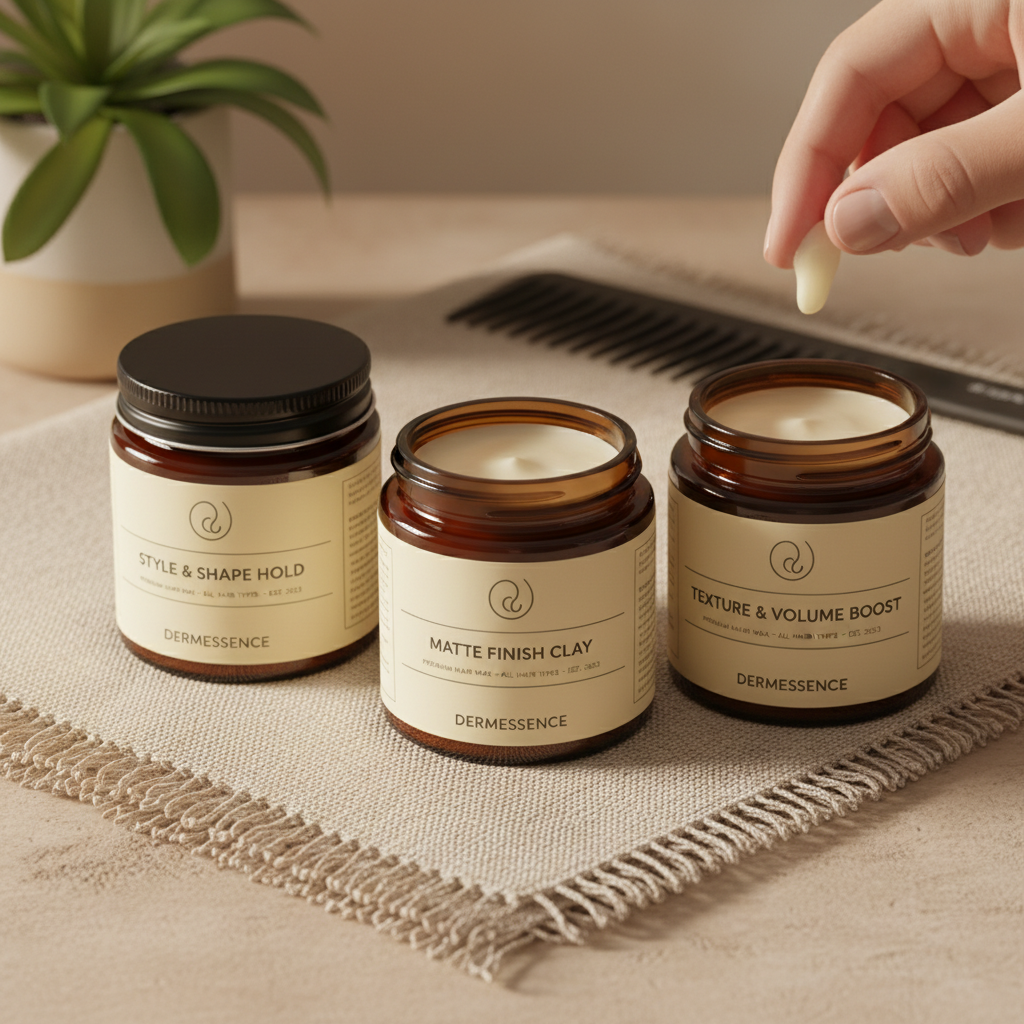
The Global Strategic Role of a Hair Wax Manufacturer
From a global perspective, the role of a Hair Wax Manufacturer extends far beyond simple production. In the current economy, the cosmetics sector is driven by rapid trend cycles—such as the rise of "clean beauty" and "men's grooming"—which require manufacturers to be agile. With the global hair styling market projected to maintain steady growth according to ISO standards for cosmetic safety, the ability to produce stable, non-toxic, and effective styling waxes is a competitive necessity for any brand looking to enter the international arena.
The strategic importance lies in the ability to standardize quality across different batches. Whether a product is destined for the humid climates of Southeast Asia or the dry air of Northern Europe, a professional manufacturer ensures the wax does not melt or flake. This level of stability is what separates a luxury brand from a generic one, making the choice of a manufacturing partner the most pivotal decision in the product development lifecycle.
Defining Technical Excellence in Hair Wax Production
At its core, a Hair Wax Manufacturer is a specialist in the emulsification of hydrophobic waxes and hydrophilic agents. Unlike gels, which are often water-based, waxes require a precise balance of lipids, resins, and oils to create a product that offers "malleability"—the ability for the user to reshape their hair throughout the day. This requires advanced machinery capable of maintaining strict temperature controls to prevent the degradation of heat-sensitive botanical extracts.
Technical excellence is further defined by the manufacturer's ability to manipulate "hold levels." From light-hold creams to extreme-hold clays, the chemical architecture must be adjusted by altering the ratio of synthetic polymers to natural waxes. A top-tier manufacturer employs rheology experts to ensure that the wax spreads evenly across the palm and adheres to the hair shaft without leaving a greasy residue or creating "white flakes," which are common failures in low-quality formulations.
Furthermore, the integration of skincare benefits into styling products has become a modern industry standard. Today's Hair Wax Manufacturer often incorporates ingredients typically found in high-end face serums or body nourishing oils, such as Argan oil or Vitamin E. This transformation of a styling tool into a nourishing treatment represents the current evolution of the industry, where aesthetics and hair health must coexist.
Core Components of High-Performance Hair Wax
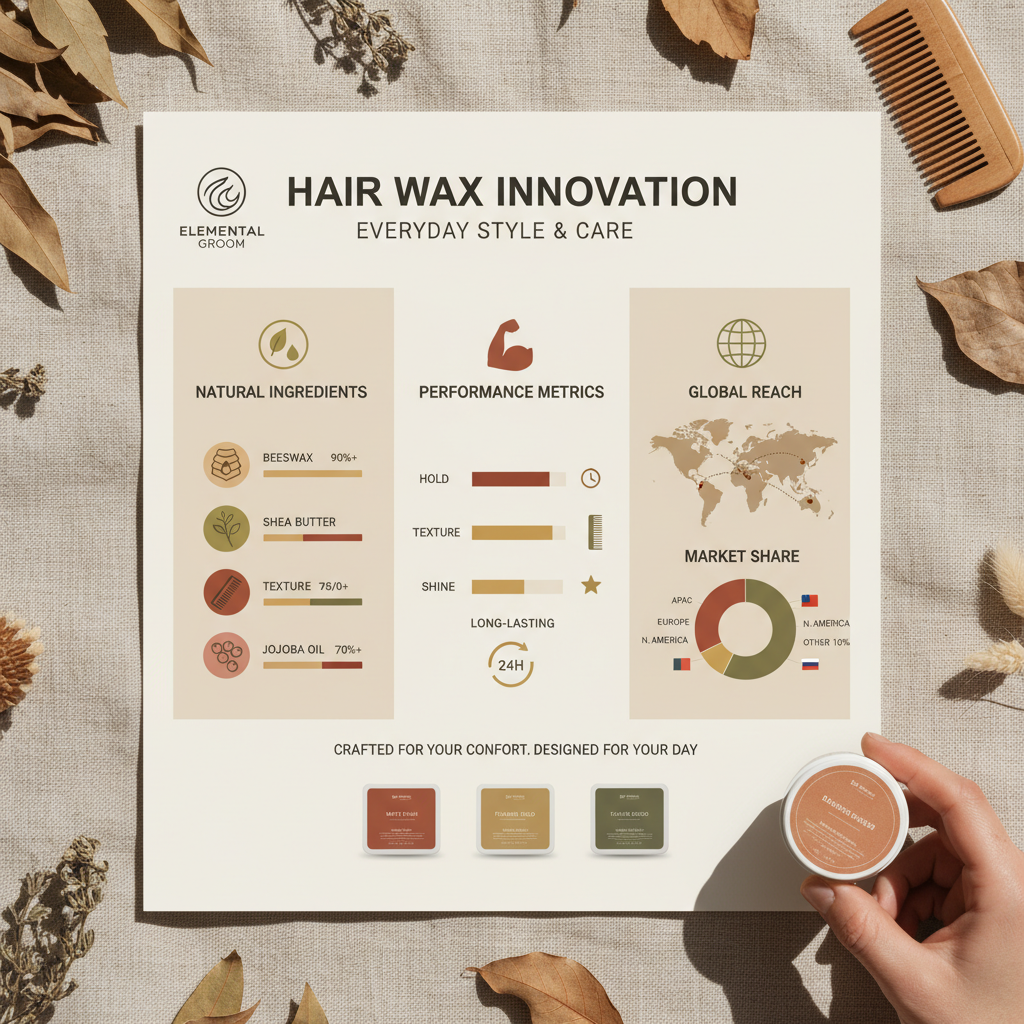
The effectiveness of a product from a Hair Wax Manufacturer depends on the synergy of its base ingredients. Typically, the structural foundation consists of beeswax, candelilla wax, or carnauba wax, which provide the necessary viscosity and grip. These are blended with emollients like shea butter or jojoba oil to ensure the product remains creamy and easy to apply, preventing the hair from becoming brittle.
Consistency and scalability are the hallmarks of a professional Hair Wax Manufacturer. By utilizing vacuum emulsification technology, they can eliminate air bubbles within the wax, resulting in a denser, more professional texture. This process is vital for ensuring that every jar produced has the exact same hold and shine, regardless of the batch size, which is essential for maintaining brand reputation in the global market.
Finally, the addition of fragrance and preservatives must be handled with extreme care. A skilled Hair Wax Manufacturer ensures that fragrances do not break the emulsion or cause skin irritation. They employ stability testing—including freeze-thaw cycles and oven testing—to guarantee that the wax remains chemically stable for 24 to 36 months, meeting the stringent requirements of international retail distributors.
Market Applications and Industrial Use Cases
The applications of products developed by a Hair Wax Manufacturer span across various consumer demographics. In the professional salon industry, high-definition waxes are used to create sculpted looks for fashion shows and bridal styling, where "long-wear" capability is non-negotiable. In the consumer retail space, the trend has shifted toward "matte" finishes for a more natural, effortless appearance, requiring manufacturers to integrate silica or kaolin clay into the formula.
Beyond standard hair care, these manufacturing techniques are applied to men's grooming kits, including beard balms and mustache waxes. The same principles of lipid-binding used in hair wax are applied to create a product that tames coarse facial hair while moisturizing the skin underneath. This diversification allows a Hair Wax Manufacturer to serve as a one-stop-shop for comprehensive grooming lines, from sulfate-free shampoos to specialized styling pomades.
Performance Comparison of Hair Wax Formulation Types
Long-Term Value of Professional Manufacturing Partnerships
Collaborating with an experienced Hair Wax Manufacturer provides an intangible but invaluable asset: risk mitigation. The cosmetic industry is heavily regulated; a manufacturer with GMP (Good Manufacturing Practice) certification ensures that every product is free from contaminants and compliant with international safety standards. This protects the brand from costly recalls and legal complications that often plague companies using inexperienced, low-cost producers.
Moreover, the long-term value manifests in the "innovation pipeline." A professional partner doesn't just execute a formula; they suggest improvements. Whether it's suggesting a shift to sustainable, vegan-certified waxes to appeal to Gen-Z consumers or optimizing the packaging to reduce environmental impact, a Hair Wax Manufacturer acts as a R&D extension of the brand, ensuring the product remains relevant in a shifting market.
Future Innovations in Styling Wax Technology
The future of the Hair Wax Manufacturer landscape is being shaped by "smart" cosmetics and bio-polymer science. We are seeing a transition toward biodegradable styling agents that offer the same hold as synthetic polymers but break down naturally in the environment. This shift is driven by global policies aimed at reducing microplastics in wastewater, forcing manufacturers to reinvent the molecular structure of traditional styling waxes.
Another emerging trend is the personalization of wax. Through digital transformation and AI-driven skin and hair analysis, manufacturers are beginning to develop "modular" bases that can be customized with specific active ingredients based on a customer's hair porosity and scalp condition. This move toward bespoke grooming suggests a future where the Hair Wax Manufacturer operates on a highly flexible, small-batch automation model.
Sustainability also extends to the sourcing of raw materials. Many manufacturers are now implementing "traceable sourcing," where every gram of beeswax or shea butter is tracked back to a sustainable farm. This transparency not only meets regulatory requirements but also serves as a powerful marketing tool for brands that wish to emphasize ethical luxury and social responsibility in their grooming lines.
Overcoming Challenges in Wax Formulation and Scale
One of the most persistent challenges for any Hair Wax Manufacturer is the "temperature sensitivity" of the product. During large-scale production, maintaining a uniform temperature across a 1,000-liter vat is significantly harder than in a lab beaker. If the temperature fluctuates, the wax may crystallize or separate, leading to a grainy texture that consumers perceive as a quality failure.
To solve this, advanced manufacturers utilize jacketed heating vessels and high-shear mixers that ensure a homogenous blend. By implementing real-time sensors and automated cooling systems, they can lock in the desired viscosity at the exact millisecond required. This technical precision ensures that the "melt-in-hand" property of the wax remains consistent across millions of units.
Additionally, balancing "washability" with "strong hold" remains a chemical tug-of-war. Traditional high-hold waxes were often oil-heavy and required multiple shampoos to remove. A modern Hair Wax Manufacturer overcomes this by using sophisticated emulsifiers that allow the wax to be water-soluble upon contact with shampoo, providing a high-performance hold that doesn't compromise the user's daily routine.
Comparative Analysis of Hair Wax Manufacturing Standards
| Formulation Type |
Hold Strength (1-10) |
Washability Score |
Production Complexity |
| Classic Pomade |
9 |
Low |
Medium |
| Matte Clay |
8 |
Medium |
High |
| Water-Based Wax |
6 |
Very High |
Medium |
| Organic Vegan Wax |
7 |
High |
Very High |
| Fiber Wax |
8 |
Medium |
High |
| Styling Cream |
4 |
Very High |
Low |
FAQS
When selecting a manufacturer, look for GMP and ISO certifications to ensure safety and quality. Evaluate their R&D capabilities by requesting samples of different hold levels (matte vs. shine). A professional partner should offer stability testing and be able to provide a clear timeline for scaling from sample batches to full-scale production.
Yes, a skilled Hair Wax Manufacturer can replace beeswax with plant-based alternatives like Candelilla or Carnauba wax. These botanical waxes provide similar structural integrity and hold while appealing to the growing vegan and cruelty-free market, though they may require slight adjustments in the emulsification process to maintain a creamy texture.
Lead times vary based on formulation complexity. Initial sampling typically takes 2-4 weeks. Once the formula is approved, mass production usually ranges from 30 to 60 days, depending on the order volume and the availability of specialized raw materials. Partnering with an integrated manufacturer can often shorten this window.
Manufacturers use stability testing and specific "melting point" engineering. By blending waxes with different melting thresholds, they create a product that remains stable under typical shipping temperatures. Additionally, they may recommend specific packaging materials that provide a thermal barrier to protect the product's consistency.
Absolutely. Modern manufacturing allows for the inclusion of hydrolyzed proteins, caffeine, or biotin. The challenge is ensuring these active ingredients remain stable and bioavailable within the wax base. A professional manufacturer will conduct compatibility tests to ensure the active agents don't compromise the hold or the scent of the wax.
MOQs vary widely. Some boutique manufacturers offer low MOQs for startups, while large-scale factories may require minimums of 5,000 to 10,000 units. Negotiating MOQs often depends on whether you are using a "white label" pre-existing formula or a fully custom-engineered formulation.
Conclusion
In summary, the choice of a Hair Wax Manufacturer is far more than a procurement decision; it is the cornerstone of a brand's product quality and market positioning. From the complex chemistry of hold and shine to the rigorous demands of global safety certifications, a professional manufacturer transforms a simple grooming product into a high-performance tool. By focusing on stability, innovation in bio-polymers, and scalable production, brands can ensure they deliver a consistent, luxury experience to their customers.
Looking ahead, the integration of sustainable sourcing and personalized formulations will define the next generation of hair styling. Brands that partner with agile, technically proficient manufacturers today will be best positioned to lead the shift toward ethical, high-performance grooming. To begin developing your signature line with an industry leader, visit our website: www.yunmeicosmetic.com.